Welcome to TMDSAS Entry Year 2026: What You Need to Know
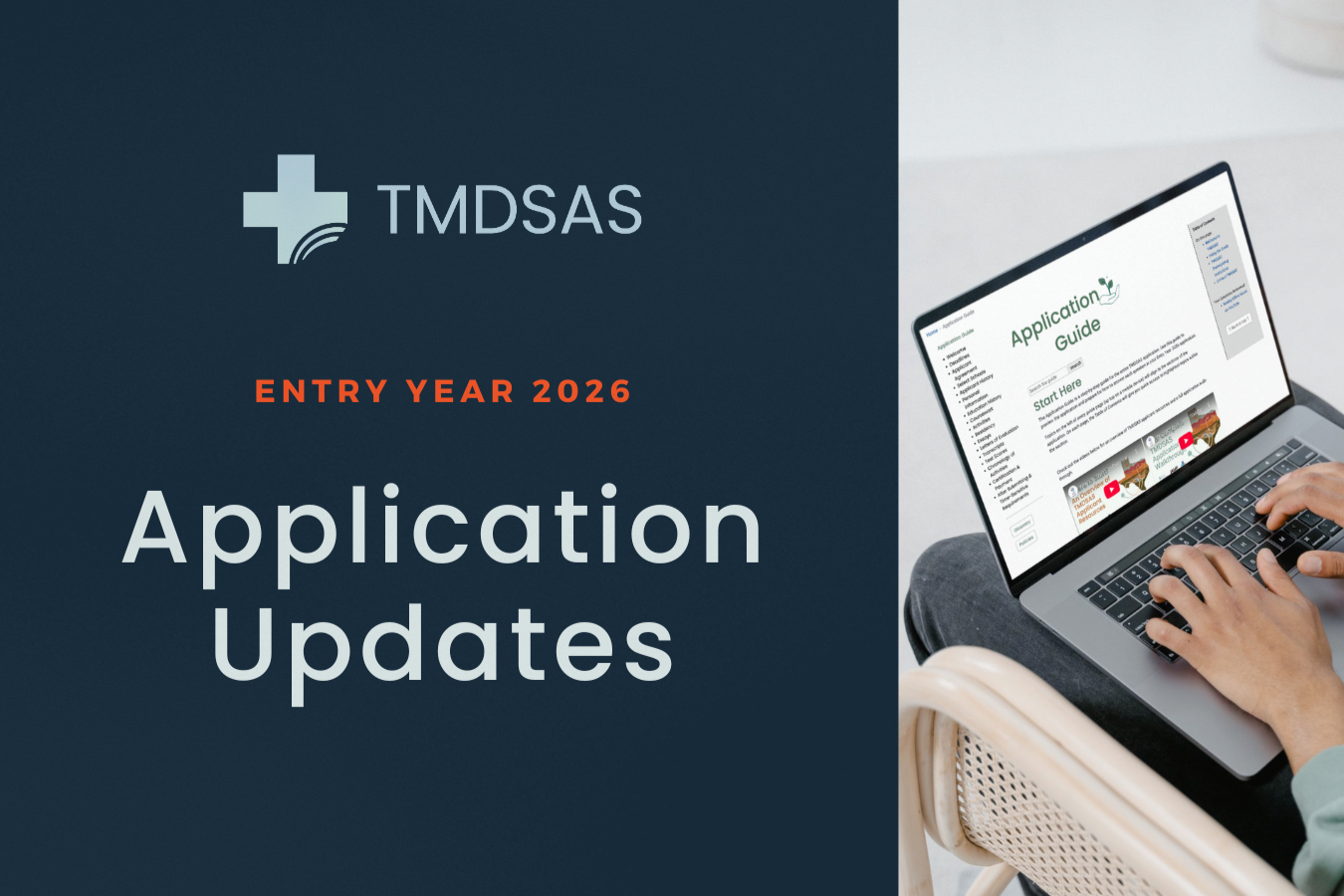
The Entry Year 2026 TMDSAS application cycle opens May 1, and we’re excited to welcome
future applicants! Whether you’re preparing your application or guiding students through
the process, staying informed and using available resources will be key to a successful
journey.
Here’s what you need to know as the new cycle launches:
📺 Attend TMDSAS Application Workshops and Panels
TMDSAS is streaming a series of application workshops and panel discussions designed
to walk applicants through every major section of the application—and answer the questions
they’re asking now.
Watch Live and On-Demand: Upcoming livestreams and previous sessions are available on the TXHES YouTube channel.
Topics Covered: Residency, letters of evaluation, how to enter coursework, activity categorization,
tips on writing personal statement & essays, common mistakes to avoid, and insights
from TMDSAS school admissions panelists.
Don't miss these opportunities to build a strong application with help from those
who know the process best!
Provides detailed, step-by-step instructions for completing each section of the application.
Includes tips and additional resources for applicants.
Benefits:
Helps you submit an accurate and complete application.
Offers important insights into what admissions committees are looking for.
Reading the guide now will save you time—and possible mistakes—later!
🛡️ Updates to TMDSAS Policies: Code of Professional Conduct & AI Usage
New this cycle, TMDSAS has updated its Code of Professional Conduct and the Applicant
User Agreement to include guidance on the use of AI tools during the application process.
Key Takeaways:
Final responses submitted must reflect your own original thoughts, voice, and intent—even if you use AI tools for brainstorming or editing assistance.
The use of AI tools or any other external resources during interviews is strictly
prohibited.
Applicants are responsible for ensuring all submitted materials are truthful, accurate,
and fully representative of their own work.
Applicants will be required to acknowledge and agree to these standards before submitting
their applications.
📣 Additional Updates for EY26 Applicants
First-Generation College Student Definition Update:
TMDSAS now defines a first-generation college student as a student who is the first
member of their nuclear family to attend a college or university, where neither biological
nor adoptive parents have completed an associate’s degree or higher.
New Short-Answer Question:
Required of all Applicants : "In what activities or experiences are you currently involved in?"
Updated Dental Experience Guidelines:
Only experiences conducted with a licensed dentist (such as TMOM events, office shadowing, or community screenings) should be listed
under Dental Experiences.
It's normal for dental applicants to have few or no entries under Healthcare Activities.
Tip: Activities like volunteering at a hospital should go under Healthcare Activities.
Outreach efforts like oral health education at schools or distributing toothbrushes
at community events should be categorized under Community Service.
Best of luck to all applicants entering the EY26 cycle! Stay connected with TMDSAS for continued updates, livestreams, and reminders to keep
you on track for success.
On September 8, 2026, the Texas Medical and Dental Schools Application Service (TMDSAS) launched the 2026 Accepted Applicant Experience Survey, inviting accepted applicants to provide feedback regarding their experiences from application to admission.
JAMP is entering a new chapter of leadership while staying true to its mission of creating opportunities for talented Texas students pursuing medicine. This year’s Council transition celebrates longtime leaders, welcomes new voices, and brings the story full circle as a former JAMP Scholar steps into the role of Chair-Elect.
JAMP is expanding its support for scholars with two new initiatives designed to meet needs both inside and outside the classroom. An emergency fund will help scholars facing unexpected financial challenges, while new research funding will create more opportunities for students to explore their interests, gain experience, and prepare for their future in medicine.